Showing posts with label complement to coffee. Show all posts

Sunday, March 20, 2022

Coffee to Go: Single use plastic straws

Guilty of using plastic straws for your chilled coffee? Even if you are not, many others are. Single-use plastic straws were found to be the seventh most collected item during a beach clean up, and the eighth-most common ocean trash. This is appalling as it not only reveals our reliance on plastic straws but also our lack of responsibility in disposing of waste.

Undoubtedly, plastic is a man-made product, unreplicable by nature. Plastic straws are typically made of type 5 plastics (polypropylene) which contain additives such as phthalates and Bisphenol A (commonly known as BPA) (Panagaes, 2019). Upon decomposition, the toxic chemicals, like BPA, are released into the environment. These chemicals affect our hormonal system by inflammation of selective membranes and potential gene mutations due to certain biological processes.

Between humans and animals, the latter is more likely to be affected by the toxicity of plastics as they may ingest them by accident. The animals thus have direct contact with the toxic chemicals as the chemicals are released within their digestive systems (Panagaes, 2019).
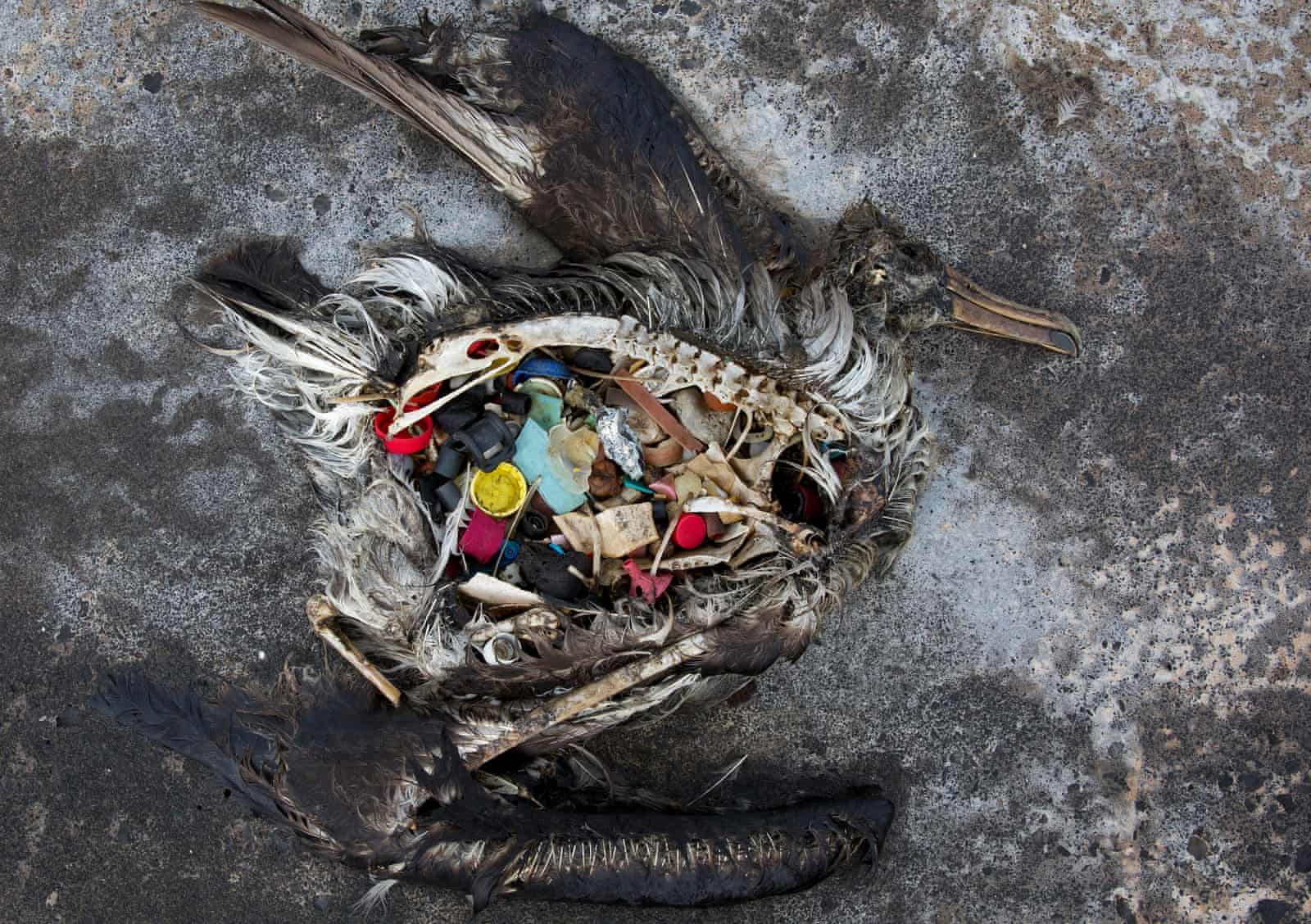
Image: Plastics found within a dead bird. Plastics take millions of years to decompose. Once ingested, the plastics may reside within the bird while releasing the toxic chemicals, eventually killing the bird. Source: Clark

The problem with straw disposal is its weight and its low cost of production. According to Mosquera, while viable, recycling factories are unwilling to recycle plastic straws due to their lightweight. Being extremely light and small, plastic straws pose a problem to recycling machinery as they may fall through the cracks and disable the machines. To not recycle plastic straws because of such a reason is disappointing as the technology for proper disposable is available, yet due to mere inconvenience, millions of marine animals and birds were killed over the years.

Plastic straws are also very cheap to produce. This cheap solution for people to consume their drinks conveniently rose in popularity after World War 2. When the war just ended and people found this convenient and cheap solution, research on the detriments of plastics were not well developed. Eventually, it became too late when scientists uncovered the truth about plastics as people have become overly reliant on them. The amount of plastic straws produced has already proliferated all around the world.

All is not lost. In recent years, activists and major food brands have proposed and joined in on the straw ban. While this does not reduce the total amount of toxicity in the world caused by plastic straw decomposition, it helps to slow down the rate of pollution. Hopefully, somewhere in the near future, suitable technologies can be developed to disintegrate plastic completely.

Monday, March 14, 2022

Milk Coffee: How does dairy production affect human health?

In recent years, there has been a growing preference for alternative milk due to reasons related to the environment and health. However, this switch is not prominent enough as dairy production is still projected to grow by 1% per annum over the coming decades (OECD). 

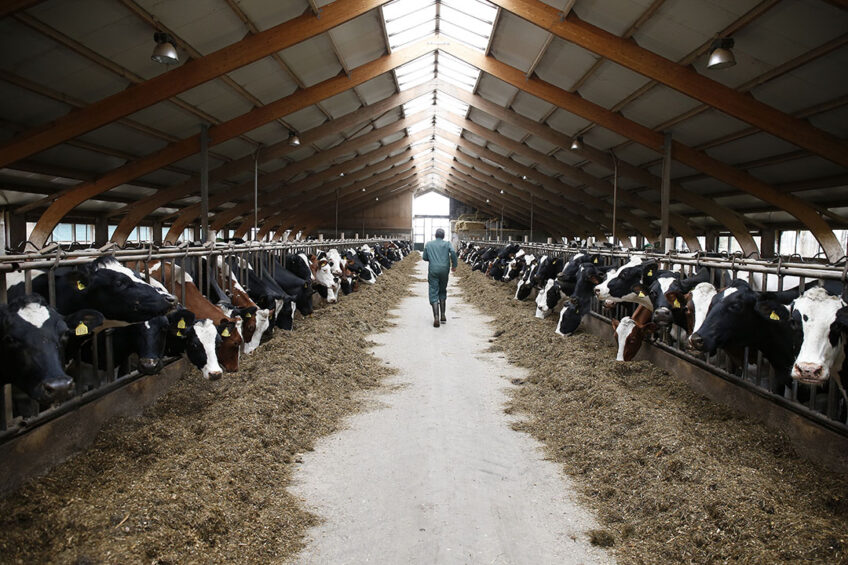
Besides the atmospheric pollution caused by cow manure, an excessive use of antibiotics used in the dairy industry pollutes the products they produce. The intensive use of antibiotics was introduced by policymakers, to expand the dairy production (Clay, Garnett, & Lorimer, 2020) while keeping diseases in check (Sentient Media, 2019).

Image 1: Confinement feeding system. Cows are kept close to together which encourages the spread of diseases. Hence, antibiotics were used to prevent disease spreading. Imgae source: Dairy Global.

The use of antibiotics in dairy production is a global issue that affects both the developing and developed countries. While we generally view antibiotics to be helpful as we use them to fight off diseases when we are sick, the excessive and indiscriminate use of antibiotics for cows (particularly beta-lactum based antibiotics) have increased the resistance of microbes, posing problems to the human and animal health (Groot and Hooft, 2016).

Groot and Hooft also adds that when antibiotics leak into the soils and waters, it inhibits the growth of useful bacteria that denitrifies the nitrates (NO3-), contributing to the acidification of soils and waters. This threatens the sustainability of plant and animal health that depend on the said mediums for survival.

An example of a type of the antibiotics - cephalosporin - is found to be particularly persistent in the environment, as it requires high temperatures and light to degrade (Das et al., 2019), suggesting that cephalosporin can terrorise the balance of the microbial ecosystem for a long time. This is especially so in countries without proper waste treatment facilities as well.

Fortunately, some governments, in countries like the Netherlands and the U.S, have realised the detriments of the excessive antibiotics use and placed are actively regulating such chemicals in the dairy and agricultural industry. 

While regulations by the state can help in cushioning the impacts of excess antibiotics leaking into the environment, we can also do our part in reducing dairy demand or switching to organic dairy options instead. Perhaps, with our collective efforts, we can reduce the scale of antibiotics pollution in the environment, starting with the dairy industry.

Monday, March 7, 2022

Coffee at Home: Packaging beans

People who prepare their coffee from the beans usually get them prepackaged in a bag. Different brands of coffee sell their prepacked beans in different kinds of bags, ranging from plastic to paper. These packages attribute only about 3% of the coffee industry's carbon footprint (Fornero, 2020), and as such its impacts on the environment are less discussed than the other pollutive processes in the industry.
According to a study by Salomone (2003), packaging contributes negligibly to greenhouse gases emissions, ecotoxicity, and ozone layer depletion. This suggests that attention on packaging used in the coffee industry is not the main concern when dealing with environmental impacts. While true that there are bigger pollutants in the coffee industry, unsustainable packaging has been forefronted by many climate change activists, making the topic of sustainable packaging relevant in today's context. 

The problem of packaging is similar to that of coffee cups, which was previously discussed. The ambiguous and misleading logos indicating that the packages are recyclable are just not helping consumers to understand the proper means of recycling. Many times, packages containing beans would be made of two or more materials. This would mean that for effective recycling, materials must be separated, else, it would be as good as throwing them into the landfills.

While some may argue that there are biodegradable packaging available, it is found that only up to 60% of materials from such packages can biodegrade (Fornero, 2020). However, depending on the materials, the remaining 40% can be recycled in their corresponding bins. In this sense, biodegradable packaging seems like a favourable alternative to recyclable bags. However, to really reap the benefits of such packages, people have to step up and play their part in recycling. This seems difficult as recycling rates in many countries fall below 50%, suggesting that the non-biodegradables are highly likely to end up in landfills.

To conclude, coffee packaging contributes little to the pollution brought about by the coffee industry. However, that should not be a reason to ignore the problem as a little bit of pollution goes a long way, especially when we consider the size of the industry. While 'biodegradable' packaging is currently the most sustainable packaging available, consumers have to start recycling properly to reap the full benefits of such packages.

Thursday, March 3, 2022

Milk Coffee: Almond milk

People in different countries tend to be more receptive towards different alternative milk, and as such, we focus on North America, as almond milk has dominated the plant-based milk market, by accumulating  63% of the market share (Young, 2021). We seek to answer the question: what are the factors that contribute to pollution during almond milk production, and to what extent are they damaging to the environment.

In a report by Simar (2020), he summarised the production process of almond milk in the US:

Stage

Source

Extent of pollution (annual)

Production

Fertilizers

-          83.7 pounds of carbon monoxide (CO)

-          59.5 pounds of ammonia (NH3)

-          74.9 pounds of nitrogen oxide (NO)

-          2.2 pounds of particulate matter (PM)

Pesticides

Chemicals used depend on farm and operating scale

Processing

Harvesting machines

Greenhouse gases and leakages depend on farm and operating scale

Almond shell cracking machine

Electricity source depends on farm and operating scale

After production

Transportation

(semi-trucks)

-          286.6 pounds of CO

-          163.1 pounds of NO

-          2.2 pounds of PM10

-          6.6 pounds of PM2.5

Packaging

Amount of plastic depends on farm

Agricultural waste

-          24.3 pounds of CO

-          2.2 pounds of NO

-          4.4 pounds of PM2.5


Simar's findings suggest that the after production of almond milk is the most pollutive, as transportation, plastic, and agricultural waste generate the greatest amounts of pollutants.

Beyond the numbers, pollution from after production also occurs globally.

Firstly, besides transportation by trucks, the milk by sea as countries export them to the global markets. According to the International Maritime Organisation, shipping accounts for 1.056 million tonnes of carbon dioxide being released, and these amounts of gases are spread across the oceans and trapped within the atmosphere. Hence, contributing to global warming on a global scale.

Secondly, the ill-disposed plastic packaging may end up within the oceans, and be swept by the currents across the globe. Besides harming the animals physically when they mistake the plastics for food, some plastics that are degraded into microplastics can be consumed by the marine life, and be bioaccumulated and biomagnified. This eventually returns to harm human health when we consume seafood.

Lastly, the chemical leaches into the soil and can contaminate groundwater storage. On a regional scale, humans who depend on groundwater storage may experience health issues. On a global scale, agricultural waste can be transported by fish and physical elements and cause problems to health as well (Nagendran, 2011).

Alas, while almond milk can cause global-scale pollution, it is still more sustainable compared to dairy milk, as its primary and processing stages of production are less pollutive. Soucing locally produced alternative milk can further reduce our pollution footprint. However, sourcing local poses a problem for land-scarce countries like Singapore, as converting land to produce primary products incur high opportunity costs. What then can an alternative solution be?

Monday, February 28, 2022

Milk Coffee: Oat milk

Dairy milk tends to be the default option for white coffees. However, in 2019, there has been a 37% decrease in dairy milk consumers since the 1970s (Held, 2020), suggesting the rise in awareness of alternative milk options. Specifically, oat milk has been gaining increasing attention in the cafe scene due to its superior taste and texture against other alternatives. Sales of oat milk have risen 71% in just a year, from 2017 to 2018 (Aydar, Tutuncu, & Ozcelik, 2020). This poses the question: are there ramifications as consumers switch from dairy to oat?

Based on Poore and Nemecek's (2018) study conducted in 2013, oat milk uses significantly less land for production as compared to dairy, suggesting that the area for non-point source pollution via fertilizers and greenhouse gas emissions will be lower.

Figure 1: Environmental footprints of dairy and alternative milk. The data is based on Poore and Nemecek's study. Source: Ritchie, 2022.

This was supported by Roos, Patel, and Spangberg (2016), who did a more comprehensive study on oat milk production's impacts on the climate. Their study found that there is a 16-41% lower direct greenhouse gases emissions from energy and fertilizers usage, and the absence of livestock cultivation. However, the risk of eutrophication between oat and dairy milk appears to be similar given the same amount of land cultivated. Additionally, as oats are made of organic matter, the necessary process of digestion of oats by the enzymes produces 21-37% more ammonia emissions than dairy milk productions during storage and distribution. This increases the ecotoxicity impact on the environment. Fortunately, the ecotoxicity impact from oat milk production can be mitigated via the cultivation of grass-clover. This is difficult for dairy production as cows are ungulates and their hooves will compact the vegetation when they graze the fields, and barns limit the amount of space available for vegetation.

Overall, it seems that oat milk production is indeed a better alternative for the environment as compared to dairy milk, as lesser land can be used to produce the same amount of both kinds of milk. This means that oat milk generates fewer emissions and pollution risks than dairy milk. 

Also, those who enjoy specialty coffee, but are constrained by dietary restrictions, should definitely consider oat milk as its flavour is not overpowering, and it does not coagulate as compared to other alternative milk. Giving the coffee a better taste and smoother texture.

Friday, February 25, 2022

Milk Coffee: The heart of pollution in the dairy industry

Regardless if it is a flat white, latte, cappuccino, or a kopi-C, kopi, 3-in-1, what is are the two ingredients that are common in both drinks? Coffee, and milk. As I have drilled on continuously about the causes of pollution in the coffee industry, I would now diverge to a complementary product to coffee. Milk.

According to Dr. Weiss, nitrogen forms bulk of a cow's diet, and only about 33% of the nitrogen intake retains in the cow's system or secreted as milk. The remaining 67% gets excreted as manure. Due to the high nitrogen content emitted, manure was found to be the primary cause of pollution in the dairy industry.

Manure can pollute the atmosphere as it releases ammonia, which can react with other pollutants in the air to form NH4+. NH4+ compounds contain aerosols which are harmful to our respiratory systems, and contributes to global warming. They can also travel long distances, which increases the expands the area of vulnerability to a global scale. (source). However, the volatility of ammonia in the atmosphere depends on the:

-   surface area
-   air movement
-   temperature
-   pH

of the manure (Weiss). Hence, while the ammonia released into the atmosphere via manure is pollutive, complex conditions need to be satisfied for atmospheric pollution via ammonia to be considered as serious.

Besides polluting the atmosphere, manure releases ammonia which pollutes the hydrosphere too. Grossman (2014) quotes the EPA, who found that a cow can generate almost 25 times as much nitrogen form manure as humans can from sewage. This is concerning as the nitrogen either leaches into the soils, which gets incorporated in the waters, or it is directly disposed of in the waters. Nitrogen is a highly potent pollutant in waters as it is a limiting nutrient. In other words, it controls the growth of organisms in water bodies as there are other reactants in the waters that are more abundant. Excess nitrogen in waters can promote the growth of cyanobacteria and algae, which creates anoxic environments in the water bodies, threatening the aquatic life.

Hence, as the dairy industry contributes expansively to pollution, is it perhaps time to consider milk alternatives?

Milk Coffee: Our carbon footprint

There are many ways to prepare coffee at home. Drip bag, capsules, from a packet or pre-packed. They all taste different, but taste is not the only differentiating factor. Each choice has a different carbon footprint as well. 

A study conducted by the Department of Environment Quality in the state of Oregon compiled four different pieces of research that estimated the carbon footprint derived from the different preparations of coffee. The simplified version is of the following:


Image source: Heller, 2017.

From the study, it appears that milk-based coffee contributes the highest carbon footprint of about 0.22 to 0.24 kg of carbon dioxide equivalent per serving. As we know, milk comes from cows, and cultivating them contributes high levels of carbon emissions.

These emissions come from the clearing of land to cultivate the crops needed to feed the cows, and the cows themselves. It was found that cows are responsible for 15% of all anthropogenic greenhouse gas emission (Bryce, 2020)!

As we know, the clearing of land reduces carbon sinks, and the increase in dairy productions increases the carbon emitted and hence trapped in the atmosphere for at least 300 years. Alas, black coffee is not a perfect subtitute for milk coffee. This suggests that dairy production will stay, and if nothing is done, the existing atmospheric pollution will only worsen.

Hence, the question that remains is: how can we reduce our carbon footprint, besides switching from a cafe latte to an americano? 

Wednesday, February 16, 2022

Coffee to Go: The Disposable Replacement

Takeaway cups provided by cafes are typically made of paper or plastic for practical reasons. Perhaps, the biggest reason being their cost-effectiveness. However, in a cafe's pursuit of cost savings, it brings about a larger opportunity cost: the increasing amount of waste generated that, in the grand scheme of things, pollute the different spheres of the Earth. In the previous series, we explored some alternatives to disposable cups usage (biodegradables, reusables etc.). However, each has its own set of problems, like the differentiated waste treatment required, and the low take-up rate for reusable cups. This begs the question: are there other ways to reduce our reliance on disposables, without the need for new technologies?

The simple answer is yes. Like many other sharing platforms that we are familiar with, cup-sharing has been proposed as an alternative to combat our issue at hand. According to Song, Lee and Jung (2020), countries like Germany, some UK countries and South Korea have attempted cup-sharing services, and these services have shown signs of improving the current plight. The article was based primarily on a South Korean University's '0U Cup' cup-sharing program, and their takeaway from the project is that the coffee-to-go scene has to change in order for people's behaviour to change. In other words, cafes have to initiate cup-sharing as a default method of takeaway, and it must be made a trendy effort for the long term success of such sharing services (Song, Lee, & Jung, 2020).

Having a default option (the shared cup) and making the service trendy have to go hand in hand for the cup-sharing to be effective, as people may be repelled by the notion if they are forced to do something, and this is where societal pressure comes in to keep behaviours in check (Croes & Bartels, 2021). This is evident from the high average return rate of 75%, and the fact that cups were generally returned to the cafes deposit box, despite there being other boxes around the campus. 

Given the right conditions, cup-sharing services thus seem like a viable alternative to disposable cups as it saves the cost of restocking disposable cups whenever they run low, and also reduce wastes littered around public spaces and accumulating in landfills. While the cup-sharing service mentioned was only a mini campus project, it would certainly benefit the environment should it be expanded to a wider scale.

Friday, February 11, 2022

Coffee to Go: Bring your own tumbler

Previously, through James Hoffman's video, we peeked into the impact that paper cups can have on our environment should we dispose of them improperly. In his video, he commented on the different alternatives to paper cups, such as bringing our own tumblers, and using porcelain or biodegradable cups. However, he also implied that it is our habits that must change, should we desire a positive and substantial impact. While that is undoubtedly true, I am curious about the public's willingness to adopt a greener lifestyle by switching to reusable cups instead of paper when they takeaway coffee.

Working in a café, I have served many takeaway coffees. While there are customers who bring their own tumblers on a regular basis, many times, paper cups is the default choice. The café where I worked started selling reusable cups a year ago, and there were some customers who bought it, perhaps in their attempt to go green. I remember that there was this regular customer who asked if she could leave her tumbler in our café and we use it every time she takes out coffee. We agreed, and this positive change happened for at least a month or two. Alas, she came back without her tumbler, and we returned to serving her coffee in paper cups.

This is not a unique case as Lee (2015) behavioral studies found that among the 100 people he surveyed, 84% knew about the pollution that paper cups can bring to the environment, but only 33% bothered to use their own tumblers. The prevailing reasons for not using tumblers are inconvenience and that uneconomical. This suggests that there is a pressing need to change people's perspective of tumblers, as in a circular economy, every paper cup we throw away, comes back to us in a negative way.

How then can we change this reliance on paper cups? Song, Lee and Jung (2020) proposes that strategies can adopt a 'default option' and 'bandwagon effect' approach to change consumers' behaviors. This will be further explored in the next post.

Wednesday, February 9, 2022

Coffee to Go: Are we really recycling?

Paper cups have been widely used in coffee shops and cafes to take hot drinks away and drink on the go. It is estimated that 16 billion cups are thrown away globally per year, which wastes 6.5 million trees and 4 billion gallons of water annually (from Greenmatch). In the video below, James Hoffman talks about the necessity for paper cups in the coffee industry, while cautioning viewers of the dangers when we over-rely on them.

To summarise the video, some key takeaways are:

  • Proper disposal methods are needed to remove the plastic lining within the paper cup before recycling. 
  • Recycling companies without the capacity to remove the linings throw the paper cups into landfills.
  • The UK government proposes to reduce paper cup usage via a "latte levy", where takeaways coffees are charged an extra 25 pence
  • Suggested alternatives to paper cups are porcelain cups, reusable cups (tumblers), and biodegradables. However, these alternatives are plagued with their own problems.
The first two points are the most interesting. Paper cup manufacturers are indirectly contributing to pollution when they print recyclable signs on the cups, as the signs are misleading for consumers, and retarding the recycling system. Paper cup manufacturers seem to be green-washing their cups, as they do not explain the conditions to meet before the cups can be recycled. Consumers then feel environmentally responsible when they throw their used paper cups into the recyling bins. When improperly disposed, the paper cups in the bins, can contaminate the recyclables, stripping away their potential to be recycled. Eventually, these wastes end up in landfills, which generate heaps of methane that pollute the atmosphere. As such, the lack of consumers' knowledge and the lack of manufacturers' initiative to educate results in a positive feedback loop of atmospheric pollution, due to the additional methane produced from waste that could be recycled.


Coffee to Go: Single use plastic straws

Guilty of using plastic straws for your chilled coffee? Even if you are not, many others are. Single-use plastic straws were found to be the...