Showing posts with label coffee to go. Show all posts

Sunday, March 20, 2022

Coffee to Go: Single use plastic straws

Guilty of using plastic straws for your chilled coffee? Even if you are not, many others are. Single-use plastic straws were found to be the seventh most collected item during a beach clean up, and the eighth-most common ocean trash. This is appalling as it not only reveals our reliance on plastic straws but also our lack of responsibility in disposing of waste.

Undoubtedly, plastic is a man-made product, unreplicable by nature. Plastic straws are typically made of type 5 plastics (polypropylene) which contain additives such as phthalates and Bisphenol A (commonly known as BPA) (Panagaes, 2019). Upon decomposition, the toxic chemicals, like BPA, are released into the environment. These chemicals affect our hormonal system by inflammation of selective membranes and potential gene mutations due to certain biological processes.

Between humans and animals, the latter is more likely to be affected by the toxicity of plastics as they may ingest them by accident. The animals thus have direct contact with the toxic chemicals as the chemicals are released within their digestive systems (Panagaes, 2019).
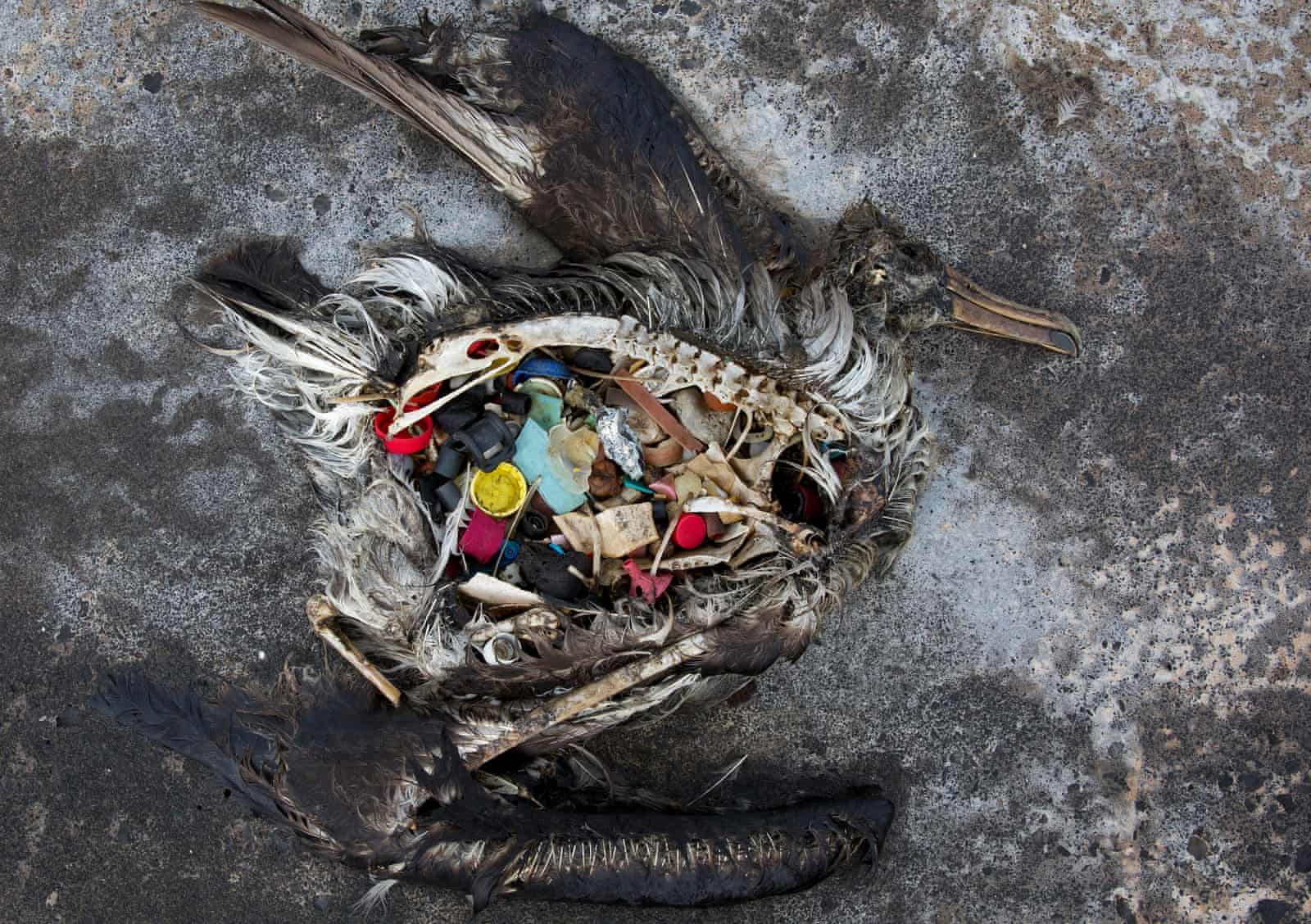
Image: Plastics found within a dead bird. Plastics take millions of years to decompose. Once ingested, the plastics may reside within the bird while releasing the toxic chemicals, eventually killing the bird. Source: Clark

The problem with straw disposal is its weight and its low cost of production. According to Mosquera, while viable, recycling factories are unwilling to recycle plastic straws due to their lightweight. Being extremely light and small, plastic straws pose a problem to recycling machinery as they may fall through the cracks and disable the machines. To not recycle plastic straws because of such a reason is disappointing as the technology for proper disposable is available, yet due to mere inconvenience, millions of marine animals and birds were killed over the years.

Plastic straws are also very cheap to produce. This cheap solution for people to consume their drinks conveniently rose in popularity after World War 2. When the war just ended and people found this convenient and cheap solution, research on the detriments of plastics were not well developed. Eventually, it became too late when scientists uncovered the truth about plastics as people have become overly reliant on them. The amount of plastic straws produced has already proliferated all around the world.

All is not lost. In recent years, activists and major food brands have proposed and joined in on the straw ban. While this does not reduce the total amount of toxicity in the world caused by plastic straw decomposition, it helps to slow down the rate of pollution. Hopefully, somewhere in the near future, suitable technologies can be developed to disintegrate plastic completely.

Thursday, March 17, 2022

Coffee to Go: Starbucks and green marketing

Green marketing - a strategy adopted by businesses to minimise their environmental damages at every stage of the production cycle, as a response to the growing concerns of environmental protection (Tsai et al., 2020). Green marketing is increasingly prevalent among businesses in different industries as it leaves a good impression on consumers and thus generates brand awareness and support (Tsai et al., 2020).

Green marketing is made up of four dimensions:

  1. Green management
  2. Green brand image
  3. Green brand relationship
  4. Green brand equity
The first dimension involves establishing a cleaner production network and developing cultures, products and activities that are more environmentally sustainable.

The second dimension involves being unique in green efforts to create a lasting, positive, and favourable memory of the brand for the customers.

The third involves developing satisfactory green products to earn the customers' trust and their attachment to the brand.

Fourth consolidates the second and third dimensions to maintain a brand's relevancy in the long run.

Given the rising awareness of how coffee production pollutes the environment, Starbucks had been engaging with green marketing to appear socially responsible for a long time now. If you are a Starbucks enthusiast, you will no doubt remember the discounted drinks when you bring your own tumbler, or felt mixed emotions about the straw ban in 2018.

Regardless of Starbucks' green strategies, the company is unable to the garner support from the environmentalists, as the strategies seem to be a decoy from the true extent of pollution they generate. For example, while Starbucks tried to collaborate with McDonalds to develop a recyclable/compostable cup solution by 2015, the solution never materialised (Mahdawi, 2018), and seems to be forgotten. Futhermore, it is believed that more than 8000 takeaway cups still end up in the landfill, pushing the environmentalists in Bellingham to speak out.

Image: "Cup Monster" built by the environmentalists in Bellingham as part of the "Better Cup" campaign to pressure Starbucks into using "100 percent recycled or tree-free cups". Source: Levy, 2017

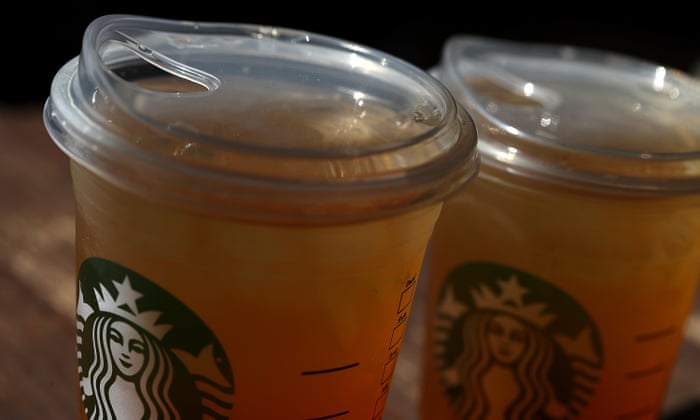
Another example is the straw ban, which resulted in straws to being replaced by sippy cup lids. While Starbucks claim that this potentially reduces the use of plastic straws by the billions, skeptics still question the effectiveness of the move, as customers can still get plastic straws elsewhere (Viswanathan, 2018). In other words, the importance of reducing plastic pollution in not internalised by consumers.

Image: Sippy cup lids rolled out by Starbucks in attempt to replace plastic straws. The lids are claimed to be recyclable, but how many of them are truly recycled? Source: Sullivan

The effectiveness of the two strategies introduced may seem like a marketing gimmick by Starbucks. However, it is still a small step towards reducing marine and land pollution. For such "gimmicks" to work, we consumers should do our part in reducing our material wastage as well.

Wednesday, February 16, 2022

Coffee to Go: The Disposable Replacement

Takeaway cups provided by cafes are typically made of paper or plastic for practical reasons. Perhaps, the biggest reason being their cost-effectiveness. However, in a cafe's pursuit of cost savings, it brings about a larger opportunity cost: the increasing amount of waste generated that, in the grand scheme of things, pollute the different spheres of the Earth. In the previous series, we explored some alternatives to disposable cups usage (biodegradables, reusables etc.). However, each has its own set of problems, like the differentiated waste treatment required, and the low take-up rate for reusable cups. This begs the question: are there other ways to reduce our reliance on disposables, without the need for new technologies?

The simple answer is yes. Like many other sharing platforms that we are familiar with, cup-sharing has been proposed as an alternative to combat our issue at hand. According to Song, Lee and Jung (2020), countries like Germany, some UK countries and South Korea have attempted cup-sharing services, and these services have shown signs of improving the current plight. The article was based primarily on a South Korean University's '0U Cup' cup-sharing program, and their takeaway from the project is that the coffee-to-go scene has to change in order for people's behaviour to change. In other words, cafes have to initiate cup-sharing as a default method of takeaway, and it must be made a trendy effort for the long term success of such sharing services (Song, Lee, & Jung, 2020).

Having a default option (the shared cup) and making the service trendy have to go hand in hand for the cup-sharing to be effective, as people may be repelled by the notion if they are forced to do something, and this is where societal pressure comes in to keep behaviours in check (Croes & Bartels, 2021). This is evident from the high average return rate of 75%, and the fact that cups were generally returned to the cafes deposit box, despite there being other boxes around the campus. 

Given the right conditions, cup-sharing services thus seem like a viable alternative to disposable cups as it saves the cost of restocking disposable cups whenever they run low, and also reduce wastes littered around public spaces and accumulating in landfills. While the cup-sharing service mentioned was only a mini campus project, it would certainly benefit the environment should it be expanded to a wider scale.

Friday, February 11, 2022

Coffee to Go: Bring your own tumbler

Previously, through James Hoffman's video, we peeked into the impact that paper cups can have on our environment should we dispose of them improperly. In his video, he commented on the different alternatives to paper cups, such as bringing our own tumblers, and using porcelain or biodegradable cups. However, he also implied that it is our habits that must change, should we desire a positive and substantial impact. While that is undoubtedly true, I am curious about the public's willingness to adopt a greener lifestyle by switching to reusable cups instead of paper when they takeaway coffee.

Working in a café, I have served many takeaway coffees. While there are customers who bring their own tumblers on a regular basis, many times, paper cups is the default choice. The café where I worked started selling reusable cups a year ago, and there were some customers who bought it, perhaps in their attempt to go green. I remember that there was this regular customer who asked if she could leave her tumbler in our café and we use it every time she takes out coffee. We agreed, and this positive change happened for at least a month or two. Alas, she came back without her tumbler, and we returned to serving her coffee in paper cups.

This is not a unique case as Lee (2015) behavioral studies found that among the 100 people he surveyed, 84% knew about the pollution that paper cups can bring to the environment, but only 33% bothered to use their own tumblers. The prevailing reasons for not using tumblers are inconvenience and that uneconomical. This suggests that there is a pressing need to change people's perspective of tumblers, as in a circular economy, every paper cup we throw away, comes back to us in a negative way.

How then can we change this reliance on paper cups? Song, Lee and Jung (2020) proposes that strategies can adopt a 'default option' and 'bandwagon effect' approach to change consumers' behaviors. This will be further explored in the next post.

Wednesday, February 9, 2022

Coffee to Go: Are we really recycling?

Paper cups have been widely used in coffee shops and cafes to take hot drinks away and drink on the go. It is estimated that 16 billion cups are thrown away globally per year, which wastes 6.5 million trees and 4 billion gallons of water annually (from Greenmatch). In the video below, James Hoffman talks about the necessity for paper cups in the coffee industry, while cautioning viewers of the dangers when we over-rely on them.

To summarise the video, some key takeaways are:

  • Proper disposal methods are needed to remove the plastic lining within the paper cup before recycling. 
  • Recycling companies without the capacity to remove the linings throw the paper cups into landfills.
  • The UK government proposes to reduce paper cup usage via a "latte levy", where takeaways coffees are charged an extra 25 pence
  • Suggested alternatives to paper cups are porcelain cups, reusable cups (tumblers), and biodegradables. However, these alternatives are plagued with their own problems.
The first two points are the most interesting. Paper cup manufacturers are indirectly contributing to pollution when they print recyclable signs on the cups, as the signs are misleading for consumers, and retarding the recycling system. Paper cup manufacturers seem to be green-washing their cups, as they do not explain the conditions to meet before the cups can be recycled. Consumers then feel environmentally responsible when they throw their used paper cups into the recyling bins. When improperly disposed, the paper cups in the bins, can contaminate the recyclables, stripping away their potential to be recycled. Eventually, these wastes end up in landfills, which generate heaps of methane that pollute the atmosphere. As such, the lack of consumers' knowledge and the lack of manufacturers' initiative to educate results in a positive feedback loop of atmospheric pollution, due to the additional methane produced from waste that could be recycled.


Coffee to Go: Single use plastic straws

Guilty of using plastic straws for your chilled coffee? Even if you are not, many others are. Single-use plastic straws were found to be the...