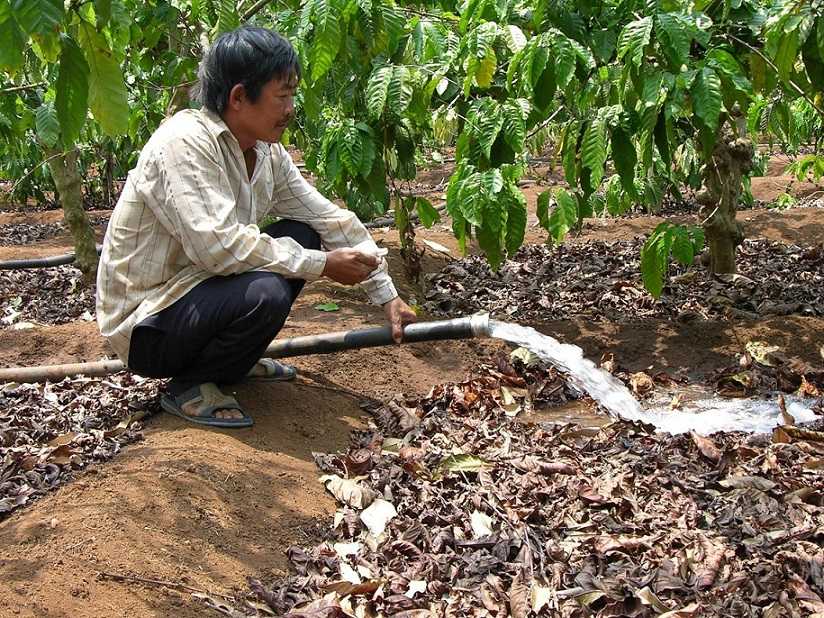
Showing posts with label coffee farming. Show all posts

Saturday, March 12, 2022

Coffee Farming: What is preventing farmers from cultivating coffee crops sustainably?

Coffee crops are widely produced along the coffee belt due to their lucrativeness and the high demand for coffee beans worldwide. While the mention of coffee brings big brands like Starbucks and Nescafe to mind, did you know that majority of the beans are produced by smallholders? 

According to Akenroye et al. (2022), there are, overwhelmingly, 21 factors that hinder smallholders from achieving sustainability (some are similar and thus combined into the following list):

Figure 1: List of factors hindering smallholders from achieving sustainability. 

Figure 2: Count of the factors derived from figure 1.

Within these factors, financial constraints seem the most obvious problem that discourages sustainable farming methods. This is not surprising as smallholders are at the bottom of the coffee production chain, which means that the primary products they produce are worth less than what secondary or tertiary producers produce. It would hence be unfair to the smallholders to adopt organic farming methods as they have to shoulder most of the burden of the high certification costs and manual labour involved. 

Sure, some say that consumers are willing to pay a higher premium in support of organically grown coffee. However, Naegele (2019) found that the premiums paid are not proportionate to the quantity and cost involved in the production process. Furthermore, with the unpredictable elasticity of coffee, farmers are not advised to raise their bean prices too high so as to protect their profits (Wienhold, 2021). Therefore, it is perhaps more favourable for large firms with supernormal profits to chip in, in order to promote sustainable farming practices. 

Some ways firms could chip in are to absorb some of the high costs that accompanies the organic certifications, impart knowledge on organic agricultural methods, and engage in research and development for more sustainable and less labour intensive ways of cultivating reasonably yield crops.
While these methods may lower profits earned by the firms, in a circular economy, what goes around comes around. By helping smallholders adopt sustainable practices as part of their corporate social responsibility, firms may eventually benefit from higher sales as consumers tend to support brands they resonate with (Hsu & Bui, 2022).

Overall, as the lack of access to sufficient finance is one of the main causes of unsustainable agricultural practices, big firms should consider aiding smallholders in their cultivation process. In the long run, this could be useful to reduce the soil, water and atmospheric pollution caused by coffee farming.

Saturday, March 5, 2022

Coffee Farming: Pests begone

Pesticides are commonly used in conventional coffee plantations as farmers want to prevent infestations in their farms, which are costly and cumbersome to resolve. However, the reliance on pesticides can degrade the environment and be harmful to human health. 

Pests come in the form of insects and fungal diseases. While the best way to combat fungi is prevention, removing moist or rotting elements (dead wood, overwatering etc.), and copper spraying, farmers typically use pesticides that contain a mix of cypermethrin, deltamethrin, chlorpyrifos, carbaryl and malathion to remove insects (Boyd, 2015).

The chemicals in the pesticides are harmful to the environment in the following ways:

Chemical

Harm

Cypermethrin and deltamethrin

Highly toxic to fishes, bees, and aquatic insects. However, the chemicals are short-lived (generally less than a month) and have low volatility in soils (NPIC).

Chlorpyrifos

Highly toxic to birds, bees, and aquatic life. Chlorpyrifos can remain in soils or surfaces for up to months and can be transported to long distances when eroded into water bodies, or bioaccumulated in animals (NPIC).

Carbaryl

Highly toxic to earthworms, bees, and some aquatic life. Depending on the physical conditions, carbaryl can take from days to months to break down completely. While carbaryl is not as toxic as the previous chemicals, it is highly volatile in soils and water surfaces (NPIC)

Malathion

Highly toxic to bees, some beneficial insects, and some aquatic life. Its residence time and volatility are like the carbaryl’s. However, malathion is also highly volatile in the air (NPIC).


In light of the impacts that these pesticides can bring to the environment, organic certifications (examples), have been introduced to promote sustainability in coffee farms. Surprisingly, despite the lack of pesticide use in organic coffee plantations, these plantations have a 6-15% less chance of being infested by pests. A director of an organic coffee farm, Juan Vargos, explained that such positive results were due to preventive measures, using composts and hard manual labour (Perfect Daily Grind, 2019).

Overall, pesticides undoubtedly pollute the environment. An option to reduce pollution can be to go organic. However, whether farmers opt to use pesticides depend on considerations like the cost and labour involved.

Monday, February 7, 2022

Coffee Farming: Pesticide

Persticides are often used in coffee plantations and unfortunately, the amount of beans produced is directly related to the amount of pesticide used when cultivating the coffee trees (Suoto et al., 2018). de Queiroz et al. (2018) also found that pesticide consumption increased by more than 90% on a global scale, of which is partly derived from coffee. Pesticide use can have detrimental effects on humans and the environment, which we will touch on today.

de Queiroz et al. had did a study on the sustainability of pesticide use in coffee production. Out of the 59 active ingredients that are detected in pesticides, the team found that about 37% of ingredients are toxic to humans and animals, and 47% to the environment. The most common ingredients belong to the organophosphorus class and the pyrethroid class. Poisoning from organophosphorus pesticides are said to cause respiratory failures, seizures, muscle weaknesses, and comas (Vale, 2015), and pyrethroid pesticides are said to cause sore throats, abdominal pain and nausea (Bradberry et al., 2005). Environmental impacts include the acidification of soils and increasing resistance to weed species (Mulla et al., 2019).

Alas, pesticide poisoning is typical in countries producing coffee. In Brazil, the world largest producer for instance, the Human Rights Watch (2019) reported that exposure to pesticides is reponsible for at least 100 deaths in a rural school within the state of Parana alone, causing one to wonder the extent of impact pesticides can have on the whole of Brazil. 
Besides direct exposure, the impacts of pesticide pollution can be felt globally. Due to the trade networks established, chemical laden coffee beans are transported and consumed easily worldwide. Toxins may bioaccumulate within those who consume the coffee made from these beans, which endangers their health in the long run.

While there are detrimental heath impacts brought about by coffee farming, it is difficult for coffee addicts to abstain from coffee. Perhaps supporting organic or sustainbuluty certified beans would be the way to go.


Saturday, January 22, 2022

Coffee Farming: Strategies in progress

Through proper management of coffee farms, production costs and fertilizer use can be lowered by 36.8% (from Thong et al., 2021). This suggests that the previously explored impacts associated with pollution can be alleviated with appropriate strategies in place. Here, we explore the effectiveness of one such strategy - sustainable certificates (SC) - in combatting the impacts of coffee farming that are associated with pollution.

Similar to our previous findings, Thong cited that environmental pollution is mainly caused by the overuse of chemicals, and the farmers were unwilling to decrease their usage as they believe that it negatively affects their yield and profits (from Thong et al., 2021). A solution devised was the introduction of SCs (from Thong et al., 2018), as such certificates entail useful programmes that educate farmers on sustainable ways of coffee cultivation to employ in their individual farms. For example, 4C's training taught farmers about reducing excessive fertilizer use via irrigation techniques, thereby reducing nutrient pollution to the soils and waters (from 4C). Hence, the incentives gained from achieving the SCs seem to be useful in reducing environmental pollution locally.

Besides environmental pollution, SCs are desirable as they help farmers increase their profits. As mentioned, with training from the different certification organizations, the cost of production of coffee is likely to decrease. Furthermore, as consumers are willing to pay more for sustainable products (from Thong et al. 2018), it suggests that if ceteris paribus holds true, a decrease in production cost and an increase in selling price equates to higher profits. This hence benefits the farmers' livelihoods and the economy.

While beneficial, SCs does have their disadvantages. The World Bank, for instance, observed a slow uptake of the certificates among the farmers, with only 25% coffee certified, compared to other major coffee producers like Brazil (41%) and Columbia (60%) (from the World Bank). The effectiveness of SCs in combatting deforestation is also not well-researched (from Baker, 2012Gaitán-Cremaschi et al., 2018). Hence, suggesting that refinements need to be done to the SC programmes to produce better results.

In this series of Coffee Farming, we briefly answered how coffee farms in Vietnam causes pollution locally and globally, and we wrapped it up by discussing the SC programmes as a strategy to reduce the effects of coffee farming pollution. This series offers only a glimpse into the primary production of coffee. There are still more to be uncovered in the next weeks.

Wednesday, January 19, 2022

Coffee Farming: A global concern

Will more be merrier? Not in the case of Vietnam's coffee plantations. Smallholders in Vietnam have been expanding their plantations for higher profits since the coffee commodity boom in the 1990s (from Hall et al., 2011). Such expansion constituting mega-projects has impacts on the global scale. Hence, we will be broadening our lenses to understand the global impacts of Vietnam's coffee mega-plantations.

Mega-plantations (from Miles and Noboru, 2019) is a concept involving the conversion of large acres of land for the farming of cash crops. This concept (according to Hall et al.) is demonstrated in Vietnam, as smallholders were eager to reap the high profits tagged to the coffee beans. Besides profits, the expansion of farmlands were also driven by unsuitable soil conditions as mentioned in the previous post. Consequently, large-scale deforestation took place, replacing 19% of  Vietnam's forest (from D’haeze et al, 2005), and releasing tonnes of sequestered carbon into the atmosphere as carbon dioxide, causing air pollution globally.

Over 1.1 million hectares of degraded agricultural land in Central Highlands, Vietnam. Image by: Nongnghiep, 2020


In addition to mega-plantations, the productivity levels of coffee trees play a subsidary role in contributing to the abovementionned air pollution. Typically, coffee trees only maintain their productivity for 15 to 25 years. Within this timeframe, factors like deteriorating soil conditions and  water availability concerns may force smallholders to replant their farmlands or abandon it (from Scherr et al., 2015), resulting in the release of carbon, polluting the atmosphere.

Farmer struggling with drought conditions. Image by: Communicaffe, 2016

While skeptics may claim that carbon dioxide is not a pollutant, they are partially right. Carbon dioxide can be categorised as naturally occuring or man-made. Only the carbon dioxide that exist as a result of human activities is considered a pollutant, as it negatively affects the environment and humans via the global warming phenomenon, resulting in undesirable circumstances like extreme weather conditions and impairment of human respiratory health (from Sciencing, 2021).

This second part of the Coffee Farming series explored how the conversion of coffee farms to mega-plantations in Vietnam, and the productivity cycle of coffee trees can cause air pollution, which contributes to the global warming effect. In the last Coffee Farming installment, we will explore the existing measures in place to reduce pollution in coffee plantations.

Sunday, January 16, 2022

Coffee Farming: Problems stemming from localized pollution

Coffee is one of the most consumed drinks in the world. According to Statista, there is a 13% increase in coffee consumed worldwide in the past five years, and just last year, more than 9 billion kilograms of coffee had been consumed. While consumers mostly benefit from the coffee industry, producers of coffee beans are often at the losing end, as they suffer different damages that accompany coffee production (from Chanakya and Alwis, 2004UNEP, 2021). Hence in this first installment of the Coffee Farming series, I would be investigating the damages experienced by the local coffee plantation workers in Vietnam, as a result of pollution during farming.


This week, we will be discussing the origins of kopi - a traditional cup of coffee that many Singaporeans recognize. As such, we will focus on Vietnam's coffee plantations, which is the largest producer of robusta beans that is essential to a cup of kopi


According to the United Nations Environment Programme (UNEP), about 80-90% of the robusta beans are produced by multiple smallholders, with the main goal of turning high yields of coffee cherries into profits. The prevalence of unfavourable soil conditions, however, inhibited the smallholders from achieving their goals. While the article aptly identified several causes for the poor soil conditions, emphasis ought to be placed on the smallholders’ lack of agricultural knowledge, which resulted in overfertilization of soils, and hence the low cherry yields. Fertilizers mainly consist of nitrogen and phosphorus, which are known to promote plant growth. As such, it seems justified that farmers associate more fertilizers with higher cherry yields. However, overfertilization causes these nutrients to leach into and pollute the soils, causing the land to be less fertile. This kickstarts a negative feedback loop, as unknowing farmers continue fertilizing the lands in hopes of higher yield. Besides soil pollution, excess nutrients may dissolve and contaminate the waters, endangering people's health and contributing to the 150 million USD damage to the economy. Hence, education on agricultural techniques is essential to prevent further damages on the regional scale.


This first of the Coffee Farming series briefly explored how ignorance towards farming techniques can lead to regional soil and water pollution, which negatively affects the farmers, the people, and the economy in Vietnam. In the next post, we will explore how the farms cause pollution on a global scale, so stay tuned!

Coffee to Go: Single use plastic straws

Guilty of using plastic straws for your chilled coffee? Even if you are not, many others are. Single-use plastic straws were found to be the...